Content and Language Integrated Learning (CLIL) Network
The CLIL approach is used across a number of Victorian primary and secondary schools.
CLIL is an approach to language teaching and learning which combines teaching content from a curriculum area while simultaneously learning and using an additional language.
For example, Music taught through Italian, Humanities taught through Japanese, Science taught through Spanish.
The LTV CLIL Network supports teachers implementing the CLIL approach through:
- professional learning workshops and webinars
- coaching and collegiate classroom visits
- CLIL website with digital clips, resources and information
- sharing information through this site and e-updates to the CLIL mailing list
CLIL in Action
CLIL and explicit teaching at Lilydale Heights College
This series of clips features 3 lessons from a Year 7 Humanities unit taught through Japanese. The clips include:
- on-screen captions identifying the Elements of Teaching from the Victorian Teaching and Learning Model (VTLM) 2.0 evident in the lessons.
- student and teacher reflections on strategies which effectively supported learning and the impact of the teaching approach
The CLIL approach is used to strategically plan the Content and Language elements of each lesson.
Download these clips for best viewing quality.
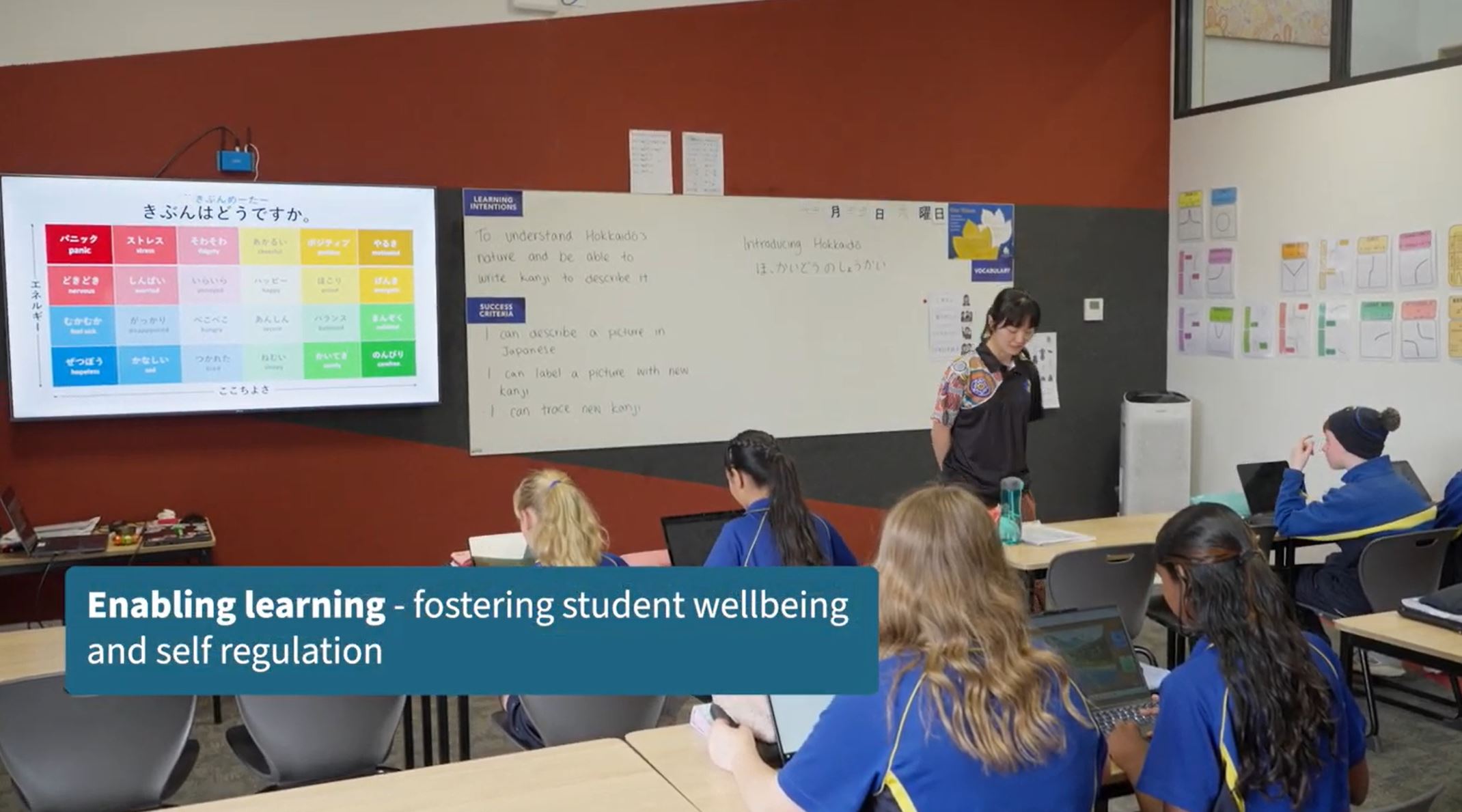
This clip features a lesson early in the unit. It provides students with the opportunity to:
- check in with the teacher about their emotions and readiness to learn
- learn kanji characters for key words in the unit
- practice of phrases to be used throughout the unit
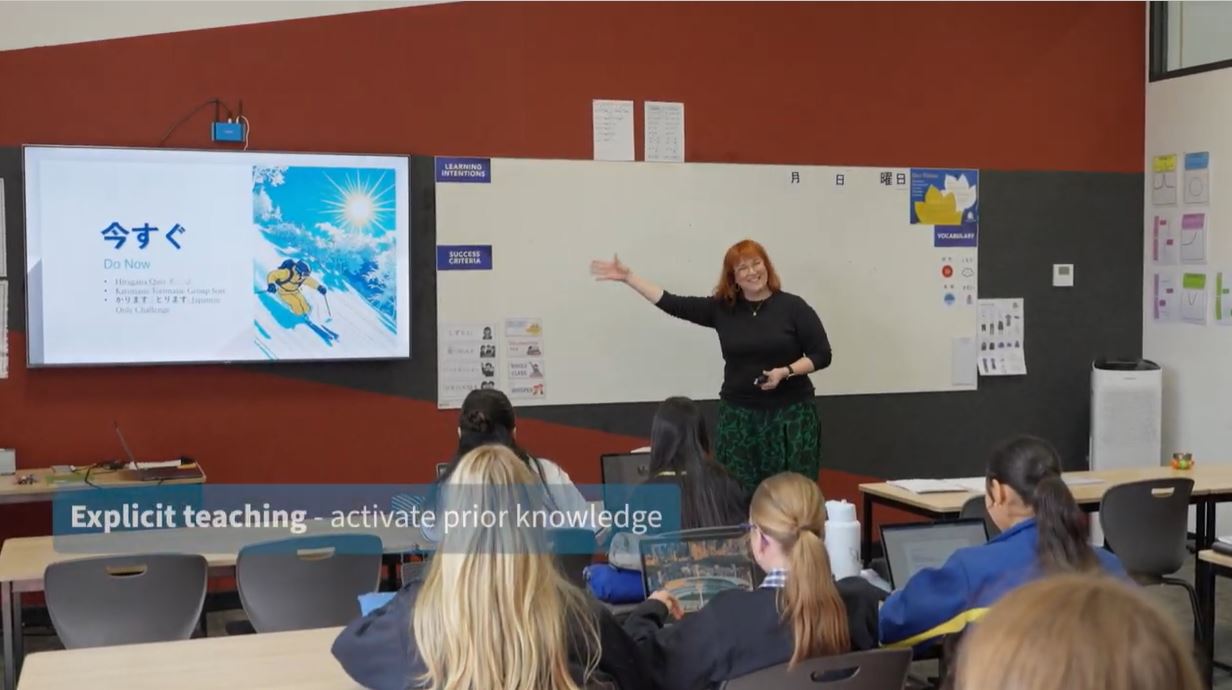
This clip features a lesson midway through the unit. It provides students with the opportunity to:
- check in with the teacher about their emotions and readiness to learn
- practise skills learnt through the unit including key words and phrases as well as hiragana characters
- lead learning with peers in small and whole group activities
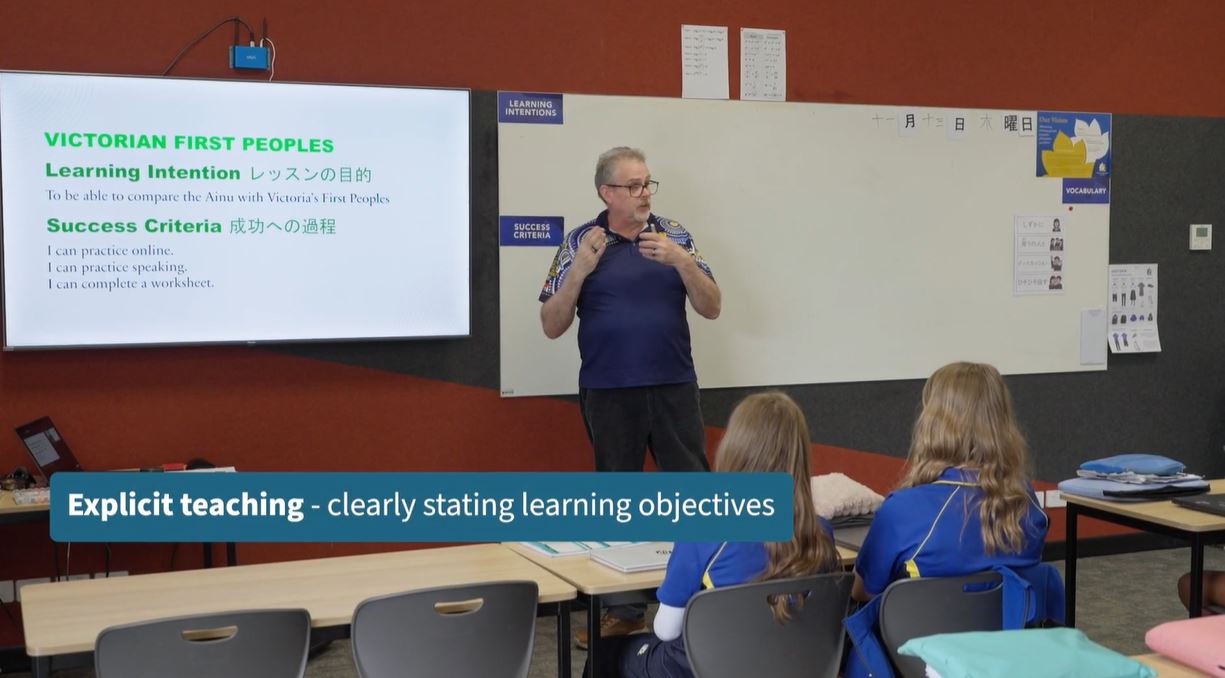
This clip features a lesson towards the end of the unit. It provides students with the opportunity to:
- check in with the teacher about their emotions and readiness to learn
- reflect on their learning, particularly focusing on content
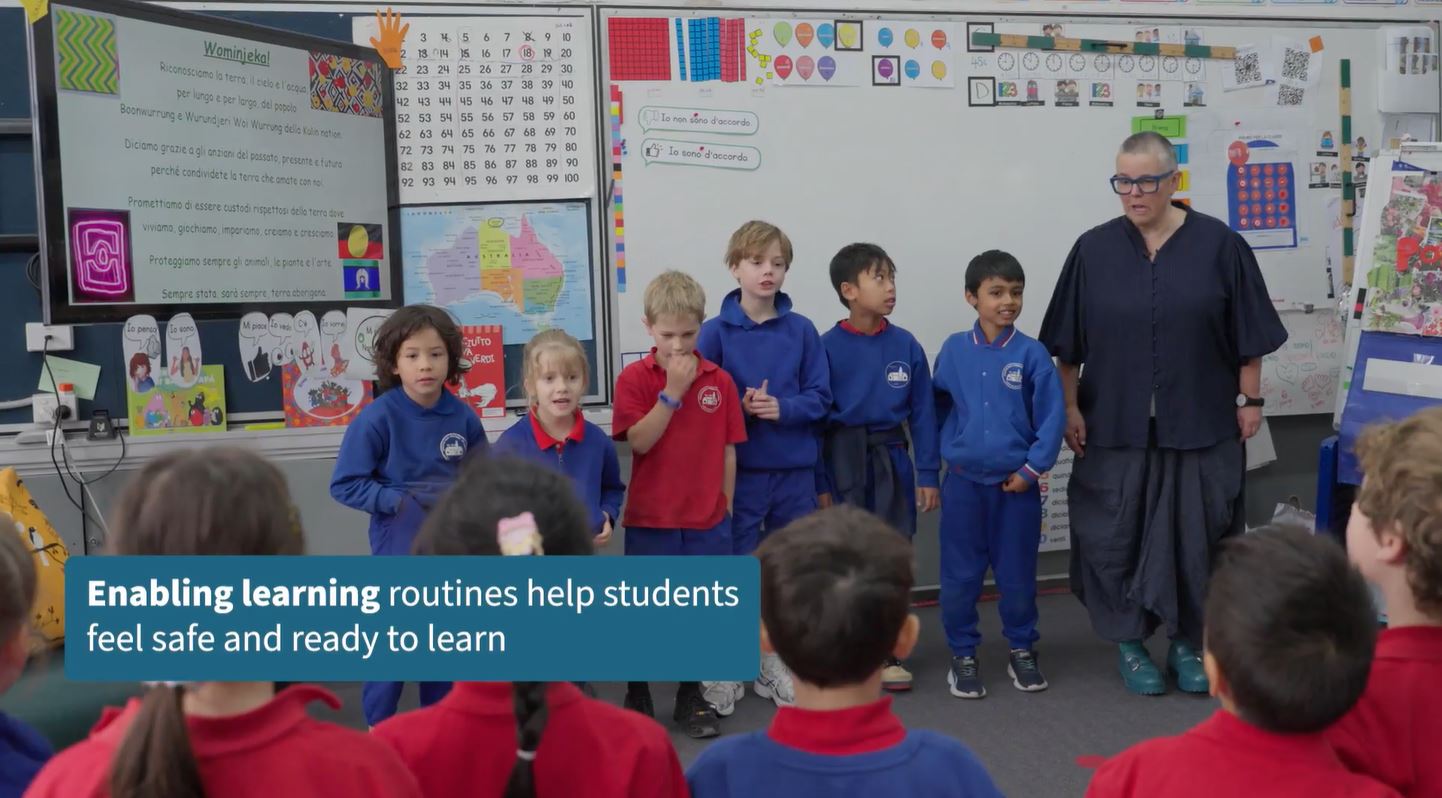
This clip features a Year 2 Maths lesson taught through Italian. It includes:
- on-screen captions identifying the Elements of Teaching from the Victorian Teaching and Learning Model (VTLM) 2.0 evident in the lesson.
- student and teacher reflections on strategies which effectively supported learning and the impact of the teaching approach
- explicit teaching of Content (Maths) and Language (Italian) in line with the CLIL approach used at the school.
Footscray Primary School is a bilingual school which teaches 50% of the curriculum through Italian and 50% through English.
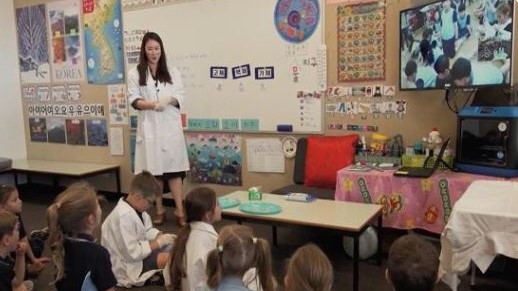
Students at Chelsea Primary School learn Science through Korean. The Content Language and Integrated Learning (CLIL) approach is implemented across F-6. Each week students have one hour of CLIL Science taught through Korean in addition to their 40 minutes Korean language lesson.
Teachers in the Japanese-English bilingual program at Huntingdale PS use the CLIL approach to support a consistent approach to the teaching of literacy skills across both languages.
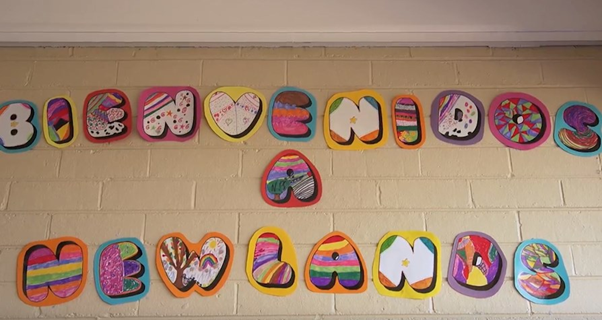
Newlands Primary School provides a Spanish bilingual program in which all children have 50% of their instruction taught through Spanish and 50% taught through English each week. The school uses the Content and Language Integrated Learning (CLIL) approach to plan for language and content outcomes to be taught through Spanish. They also include a focus on literacy and numeracy in the Spanish program and provide students with many engaging opportunities to apply their Spanish language skills.
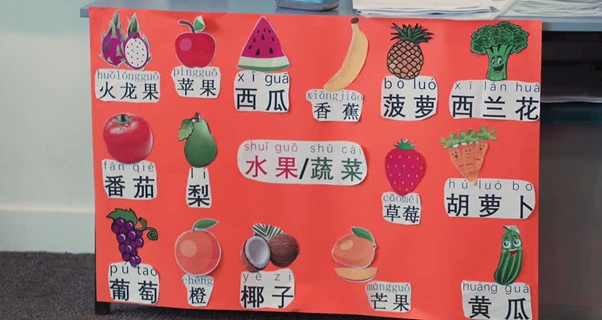
The Chinese teacher at Knox Park Primary School incorporates elements of Mathematics in her Chinese language program. This clip features some examples of how she supports her Year 1/2 students to develop their Numeracy skills through Chinese.
This lesson is based on a unit of learning available on ARC in French, German, Italian, Indonesian, Japanese and Spanish.
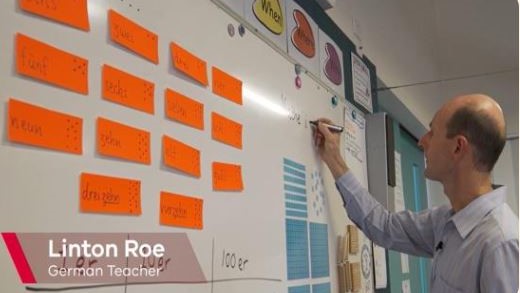
Effective teaching of Mathematics through German requires careful planning of both the Mathematics and Language elements. This clip features a teacher of German demonstrating and reflecting on the way he incorporates High Impact Teaching Strategies to inform the planning and teaching of Mathematics through German with Year 3/4 students at Carrum Primary School.
Click here to access the lesson plan associated with the lesson in this clip.
This lesson is based on a unit of learning available on ARC in French, German, Italian, Indonesian, Japanese and Spanish.
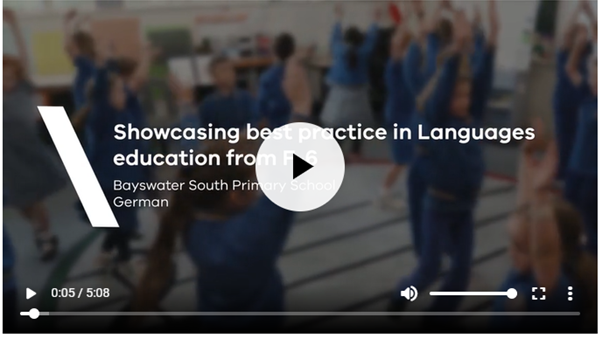
Bayswater South Primary School provides a German bilingual program in which all children have 50% of their instruction taught in German and 50% taught in English each week. The school uses the Content Language Integrated Learning (CLIL) framework to plan for language and content outcomes to be taught through German. They also include a focus on literacy in the German program and provide students with many engaging opportunities to apply their German language skills.
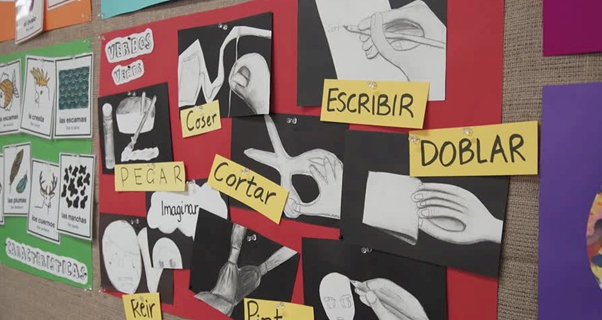
Westgarth Primary School used the Content Language and Integrated Learning (CLIL) approach in its provision of Spanish. All F-6 students engaged in Discovery (Science and Humanities) and Visual Arts through Spanish. Junior students also participated in Music classes taught in Spanish. The school leadership and school community valued the contribution that the CLIL approach provided for supporting student language development and engagement in learning.
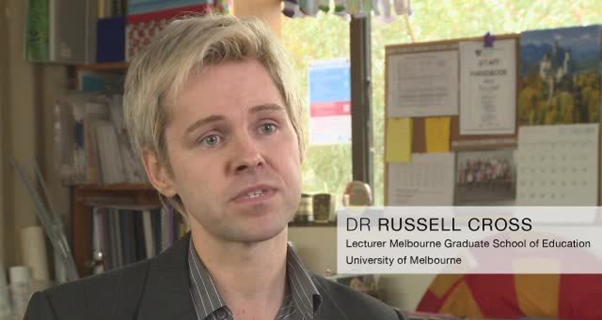
Professor Russell Cross provides an overview of various schools implementing the CLIL approach
CLIL Professional Learning
LTV Recorded Webinars
Click the title of the 1hr webinars below to access the recording
Overcoming Challenges through CLIL
Mara Ballarini and Floriana Torelli, Cairns State High School 2023
Audience: Secondary
CLIL: Teaching Visual Arts through an additional language
Marta Liesa, 2023
Audience: Primary
Setting up for success with CLIL
Presenter: Shu Ohki, 2022
Audience: Primary/Secondary
CLIL: Supporting engagement and retention of language learners
Presenter: Kylie Farmer, 2021
Audience: Primary/Secondary

New webinar coming soon…
New webinar coming soon…
CLIL PL Modules & Presentations
CLIL PL Modules in Scootle including six videos which showcase what CLIL looks like in the classroom as well some practical tips for implementation
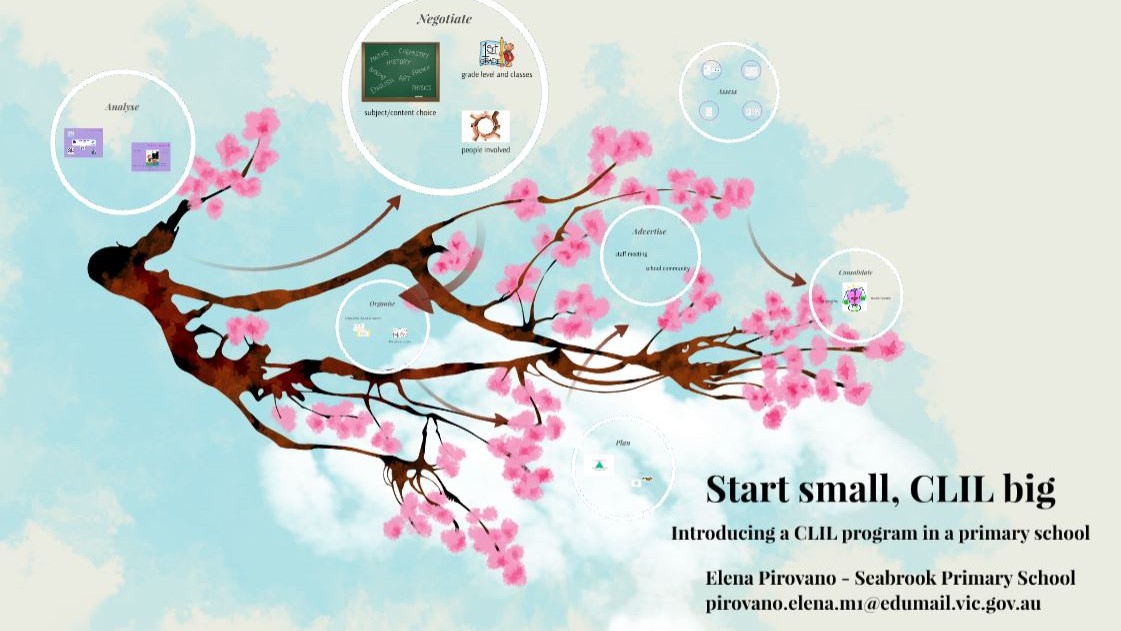
Start Small, CLIL big
Presentation by Elena Pirovano
CLIL with P-Plates: Establishing a new CLIL program at Secondary School
Presentation by Lauren Gould
CLIL Presentations by Professor Do Coyle
What about CLIL in the language classroom? (1:46)
How do you define CLIL? (6:04)
What are the principles of CLIL? (7:13)
What is your vision for CLIL for the future? (1:29)
What advice would you offer a school considering CLIL for the first time? (3:31)
CLIL in Action- Extract from the CLIL Teachers Tool Kit: a classroom guide
CLIL Resources
CLIL Unit Planner: Make a copy of this blank template to plan your own CLIL unit.
CLIL Units

Year 7 CLIL Science Unit of learning
The packages include the unit planner (aligned to the Victorian Curriculum) and all teacher and student resources for a 10 -12 week unit on Scientific Method and States of Matter in the following languages:
Year 1-2 CLIL Units of Learning
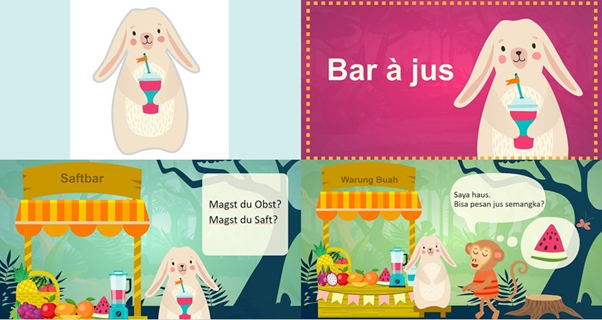
The Juice Bar units have been developed as a resource package for Year 1 and 2 students. The units include some elements of CLIL as they include Content from the Health and Numeracy curriculum areas.
In terms of Language, they introduce the names of common fruits and phrases for students to be able to express which fruits they like and which they don’t. Students will also be able to describe fruits as healthy or delicious.
The package includes a 10 lesson unit planner exemplifying links to the Victorian Curriculum, worksheets, flashcards and other resources.
New CLIL Unit coming soon
CLIL FAQ
Immersion education and Content and Language Integrated Learning (CLIL) both fall within the field of bilingual education, having as goals the addition of another language to students’ knowledge and skills. Both are offered as optional programs within a mainstream school and aim to develop plurilingualism, biliteracy and cultural diversity.
Immersion education involves the delivery of the mainstream curriculum to children from a language majority background in an additional language, and is offered via a full (100% of the curriculum) or partial (at least 50%) program model. The additional language is used for the medium of instruction and is largely confined to classroom use, although there may be some contact in the outside community. The focus is on the language needed for the content of the curriculum discipline area/s with some attention being paid to developing explicit knowledge of the linguistic, semantic and pragmatic features of the additional language in order to succeed in assessment tasks which focus on the content. An immersion program is offered as an optional stream within a school and runs for the same number of years as the regular mainstream program. The majority of immersion teachers are native or near-native speakers of the language. They usually have a teacher education qualification in immersion education.
CLIL can be delivered in a number of ways. Weak forms range from the teaching of one theme or topic in an additional language to the teaching of one discipline area for a term or a semester, while strong forms can include teaching one discipline area for one or two school years. CLIL involves a dual-focused approach where the additional language is used for the explicit teaching and learning of both content AND language. The additional language can be a ‘foreign’, second or community/heritage language. A CLIL program can run for a number of weeks or months, a term or terms, or one school year. All CLIL programs are based on a theoretical framework which integrates four areas: content, cognition, communication and culture. They are also informed by six core features: a multiple focus (integrating language and content learning through several subject areas or cross – curricula themes or projects); a safe and enriching learning environment (use of learning centres, displays of language and content in the classroom); authenticity (connecting with other speakers of the language, using current materials); active learning (student-centred not teacher-centred, co-operative learning); scaffolding (building on learners’ existing knowledge, interests, experiences, responding to different learning styles, fostering creative and critical thinking, challenging students); co-operation (content and language teachers plan together, local community and parents are involved). Although there may be some native speakers teaching, the majority of CLIL teachers are non-native speakers of the language; they may be discipline area specialists with some level of competence in the CLIL language.
differs from traditional languages learning in its pedagogical approach, learning outcomes (both content AND language)
emphasizes progression in new knowledge, skills and understanding
promotes meaningful interaction and progression in language using and learning
focuses on production of both oral and written texts
promotes engagement in higher order thinking and understanding, creativity and accepting challenges and reflecting on them
develops an awareness of ‘self’ and ‘others’, of identity, and progression towards pluri-cultural understanding through links with partner schools
values different home languages
promotes development of cross-curricula knowledge and skills by having learners study new concepts in their non-native language
encourages problem-solving, inquiry-based learning, information processing
promotes enjoyment of language learning leading to success; learners can see they are making progress
develops a higher level of language proficiency than regular language courses
addresses some issues of a “crowded curriculum” since both language and subject discipline areas are taught at the same time
supports a team-work approach for teachers
challenges teachers and learners and raises expectations of advanced language learning and the development of thinking skills
provides flexible approaches which can be adapted to any context
promotes teacher co-operation and collegial approach to curriculum delivery
provides opportunities for cross-curricula planning
encourages teachers and students to ‘think’ outside of rigid subject boundaries and to make connections across discipline areas
focuses on relevant and engaging topics and materials
develops thinking skills through the use of authentic materials and task-based, inquiry learning
uses co-operative learning which encourages exploratory talk more than presentational talk
develops intercultural awareness and a world view rather than a narrow local focus
uses a “plan-use-review” cyclical approach (cf Action Research)
develops both Basic Interpersonal Communicative Skills (BICS) and Cognitive Academic Language Proficiency (CALP), two aspects of language learning proposed by Jim Cummins in the 1970s
draws on successful pedagogies from BOTH languages and the subject discipline area/s
draws heavily on language scaffolding techniques
There is a potential for teachers to confuse CLIL with content-based teaching which focuses on delivering content through an additional language, but does not develop this language at the same time. Following are some points which reflect an approach which is NOT a CLIL one:-
focusing on content and understanding, without specific strategies to also develop and push students’ production of the NEW language which is the target for each lesson
using content only for topics or themes to support language teaching (i.e., not an equal focus on developing students’ knowledge of language and NEW content)
replicating known content without any NEW understanding, development, or extension to existing skills or knowledge; for example, teaching the exact same content as the mainstream teacher has presented in the students’ first language, or delivering a small component of a broader topic without making connections to the wider area
just changing the language of instruction
using large amounts of teacher-focussed instruction and not allowing time for student-centred learning
focus on learning facts
In the Australian context, there could be a number of types of CLIL programs. Given the cognitive, linguistic, and social benefits of learning through a CLIL approach, including its contribution to the development of oracy and literacy, CLIL has significant potential in the early and primary years of schooling. It provides additional exposure to the skills needed to learn to decipher, read and write in a language, while addressing the vexed issue of the crowded curriculum.
This is a particular challenge in primary schools where Languages often languish at the bottom of the priority list, while other subjects also compete with dedicated curriculum time spent specifically on literacy and numeracy. By working with Languages across an integrated, thematic curriculum, the CLIL language teacher could be entrusted with delivering an appropriate part of the class theme in the additional language. Alternatively, the CLIL teacher could take responsibility for a specific curriculum unit each semester (e.g., Science) to be delivered through the additional language, planned in collaboration with the generalist classroom teacher.
In secondary schools, CLIL subjects could be introduced as an option, particularly at Years 9 and 10 where numbers tend to drop dramatically and when students have electives to choose from. Rather than positioning Languages in competition with other areas of the curriculum, students could elect to undertake both through an integrated model. This also enhances the meaningfulness of the content that underpins the school’s Languages program, in relation to the broader curriculum. The CLIL program could run in different disciplines in each semester across these two years and provide students with excellent preparation for VCE language units. At secondary school, where the language teacher is also a teacher of another discipline, the same class could be allocated to this person for both areas, and a topic, or part of a unit of work could be delivered through the additional language. This could start at Year 7 or Year 8 and be provided as an option for students who elected to participate in such a program.
As well as being suitable for mainstream schools, it would be a highly appropriate model for Community Languages schools to adopt. Providing students who attend these schools with relevant, motivating and challenging topics, materials and tasks would provide a means of attracting and retaining students, especially in the early years of adolescence.
In the Australian context, there could be a number of types of CLIL programs. Given the cognitive, linguistic, and social benefits of learning through a CLIL approach, including its contribution to the development of oracy and literacy, CLIL has significant potential in the early and primary years of schooling. It provides additional exposure to the skills needed to learn to decipher, read and write in a language, while addressing the vexed issue of the crowded curriculum.
This is a particular challenge in primary schools where Languages often languish at the bottom of the priority list, while other subjects also compete with dedicated curriculum time spent specifically on literacy and numeracy. By working with Languages across an integrated, thematic curriculum, the CLIL language teacher could be entrusted with delivering an appropriate part of the class theme in the additional language. Alternatively, the CLIL teacher could take responsibility for a specific curriculum unit each semester (e.g., Science) to be delivered through the additional language, planned in collaboration with the generalist classroom teacher.
In secondary schools, CLIL subjects could be introduced as an option, particularly at Years 9 and 10 where numbers tend to drop dramatically and when students have electives to choose from. Rather than positioning Languages in competition with other areas of the curriculum, students could elect to undertake both through an integrated model. This also enhances the meaningfulness of the content that underpins the school’s Languages program, in relation to the broader curriculum. The CLIL program could run in different disciplines in each semester across these two years and provide students with excellent preparation for VCE language units. At secondary school, where the language teacher is also a teacher of another discipline, the same class could be allocated to this person for both areas, and a topic, or part of a unit of work could be delivered through the additional language. This could start at Year 7 or Year 8 and be provided as an option for students who elected to participate in such a program.
As well as being suitable for mainstream schools, it would be a highly appropriate model for Community Languages schools to adopt. Providing students who attend these schools with relevant, motivating and challenging topics, materials and tasks would provide a means of attracting and retaining students, especially in the early years of adolescence.
CLIL units are best planned collaboratively within a school with both content and language teachers involved. Where these are the same person, units of learning could be prepared collaboratively with teachers from other schools, or as part of professional learning activities offered by language teacher associations.
LTV has developed a planning template which can be used.
Some sample units are also available on this site.
It is essential that these units address both language AND content and include CLIL pedagogical approaches. This means helping teachers to move away from a highly teacher-centred classroom to a more learner-centred dialogic one.
It is NOT a case of translating materials which exist in English and which are used in the mainstream classes in English, but much more a process of teachers having to decide how the content will be taught through the target language, what language will be required for dealing with this content AND also for enabling learners to communicate with each other and with the teacher in task-based, small group or pair work activities.
The book called CLIL by Coyle, Hood and Marsh (2012) includes a useful section to support CLIL planning (p53 – 67).
The responses to these FAQs were developed by Dr Margaret Gearon drawing on the following references:
Bentley, K. 2010. The TKT Course: CLIL Module. Cambridge, Cambridge University Press.
Coyle, D. 2007. Content and Language Integrated Learning: Towards a connected research base. International Journal of Bilingual Education and Bilingualism, 10, 5, 543-62.
Coyle, D., Holme, B. and King, L. 2009. Towards an Integrated Curriculum –CLIL National Statement and Guidelines. United Kingdom, The Languages Company.
Coyle, D., Hood, P. and Marsh, D. 2010. CLIL: Content and Language Integrated Learning. Cambridge, Cambridge University Press.
Dale, L. and Tanner, R. 2012. CLIL Activities: a resource for subject and language teachers. Cambridge, Cambridge University Press.
Hansen – Pauly, M-A. et al. 2009. CLIL across contexts: A scaffolding framework for CLIL teacher education. European Commission, Socrates-Comenius Project 2.1. (available at http://clil.uni.lu)
Llinares, A., Morton, T. and Whittaker, R. 2012. The Roles of Language in CLIL. Cambridge, Cambridge University Press.
Mehisto, P. 2012. Excellence in Bilingual Education: A Guide for School Principals. Cambridge, Cambridge University Press.
Mehisto, P., Marsh, D. and Frigols, M-J. 2008. Uncovering CLIL. Oxford, Macmillan Books for Teachers.
Useful links
- CLIL Unit Planner template
- CLIL Teacher Education Lab
University of Melbourne, Faculty of Education initiative to build and strengthen teacher capacity in the use of CLIL
- AILA Research Network for CLIL
- ELAPSE – Embedding Languages Across Primary and Secondary Education
Languages for Education Europe (LFEE) funded portal of CLIL teacher learning and support materials


